



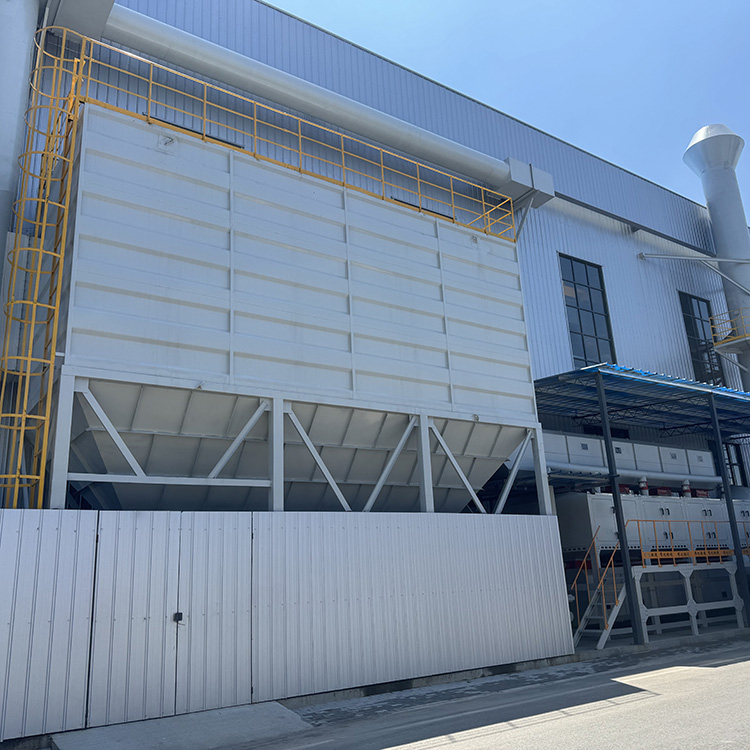
Carbon Steel Baghouse Dust Collector
Carbon Steel Baghouse Dust Collector A carbon steel baghouse dust collector is a heavy-duty industrial filtration system designed to capture dust, fumes, and particulate matter from manufacturing processes . Carbon steel provides high struc...
Carbon Steel Baghouse Dust Collector
A carbon steel baghouse dust collector is a heavy-duty industrial filtration system designed to capture dust, fumes, and particulate matter from manufacturing processes. Carbon steel provides high structural strength and cost efficiency, making it a practical choice for large-scale dust collection systems in cement, mining, metallurgy, woodworking, chemical processing, and other industries.
Structural Composition
A typical carbon steel baghouse dust collector consists of:
Dust inlet
Filter chamber
Filter bags
Filter cages
Dust hopper
Pulse-jet cleaning system
Clean-air chamber
Exhaust fan
Control system
The housing and internal components are designed to withstand continuous airflow, dust loading, pressure fluctuations, and mechanical cleaning forces.
Working Principle
Dust-laden air enters the baghouse through the inlet. Larger particles may settle due to reduced airflow velocity, while finer particles are captured on the surfaces of the filter bags.
Clean air passes through the filter media and exits through the clean-air chamber.
As dust accumulates, filtration resistance increases. The cleaning system periodically removes the accumulated dust from the bags.
The combination of surface filtration and effective dust cleaning allows the collector to maintain stable filtration performance during continuous operation.
Advantages of Carbon Steel Construction
Carbon steel offers several benefits for industrial dust collectors:
High mechanical strength
Good weldability
Excellent structural rigidity
Cost-effective fabrication
Suitable for large equipment
It is particularly suitable for large-capacity dust collectors where structural strength and economical manufacturing are important considerations.
Filter Bag Selection
Filter bags are the core filtration components.
Common materials include:
Polyester
Aramid
PPS
PTFE
Fiberglass
The appropriate filter material depends on:
Dust characteristics
Operating temperature
Humidity
Chemical composition
Required filtration efficiency
Incorrect filter selection can lead to premature bag failure, excessive pressure drop, or reduced filtration efficiency.
Pulse-Jet Cleaning System
Pulse-jet cleaning is widely used in baghouse collectors.
Compressed air is released through pulse valves and blow pipes, producing a short high-pressure pulse that expands the filter bags and removes accumulated dust.
The cleaning frequency and pulse pressure should be optimized to balance dust removal efficiency, compressed-air consumption, and filter bag service life.
Dust Hopper and Discharge
The hopper collects dust removed from the filter bags.
Common discharge equipment includes:
Rotary airlocks
Screw conveyors
Double-dump valves
Proper hopper design should prevent dust bridging and accumulation.
Corrosion Protection
Although carbon steel is strong and economical, it requires suitable corrosion protection in humid or chemically aggressive environments.
Common measures include:
Surface blasting
Primer coating
Protective painting
Internal anti-corrosion treatment
The coating system should be selected according to humidity, temperature, chemical exposure, and expected service life.
Performance Factors
The performance of a carbon steel baghouse depends on:
Airflow capacity
Filter area
Air-to-cloth ratio
Dust concentration
Pressure drop
Cleaning efficiency
Proper system sizing helps achieve effective dust capture without excessive energy consumption.
Maintenance Requirements
Regular maintenance should include:
Inspecting filter bags
Checking filter cages
Cleaning the hopper
Inspecting pulse valves
Checking differential pressure
Inspecting seals and access doors
Timely replacement of damaged filter bags helps prevent dust leakage and protects downstream equipment.
Applications
Carbon steel baghouse dust collectors are widely used in:
Cement plants
Mining operations
Metal processing
Foundries
Woodworking
Chemical plants
Aggregate processing
Power and industrial facilities
Conclusion
Carbon steel baghouse dust collectors provide a strong, economical, and reliable solution for large-scale industrial dust control. Through proper equipment sizing, suitable filter media, effective pulse cleaning, corrosion protection, and regular maintenance, these systems can provide stable filtration performance and long operating life.
A professionally engineered carbon steel baghouse helps improve workplace air quality, reduce particulate emissions, protect production equipment, and support cleaner industrial operations.
References
US EPA – Fabric Filter / Baghouse Particulate Control Technology
NFPA 652 – Standard on the Fundamentals of Combustible Dust
ASHRAE Standard 52.2 – Method of Testing General Ventilation Air-Cleaning Devices
ISO 16890 – Air Filters for General Ventilation
ASTM A36/A36M – Standard Specification for Carbon Structural Steel
ISO 9001 – Quality Management Systems Requirements