



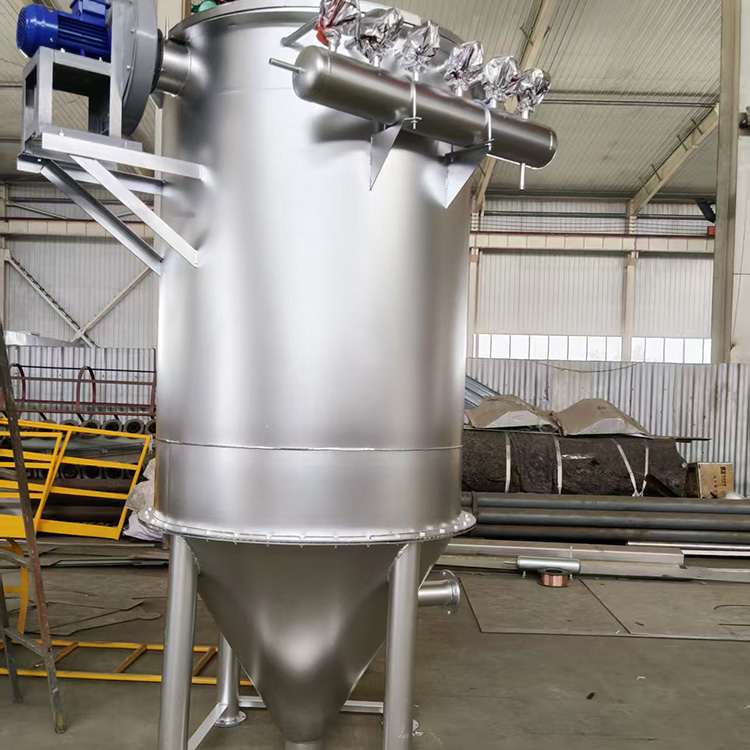
Cylindrical Stainless Steel Dust Collector
Cylindrical Stainless Steel Dust Collector A cylindrical stainless steel dust collector is an industrial filtration system designed to capture and separate dust particles, fumes, and airborne contaminants through a cylindrical airflow struc...
Cylindrical Stainless Steel Dust Collector
A cylindrical stainless steel dust collector is an industrial filtration system designed to capture and separate dust particles, fumes, and airborne contaminants through a cylindrical airflow structure. With advantages such as compact design, high corrosion resistance, and stable filtration performance, it is widely used in metal processing, chemical production, food manufacturing, pharmaceutical industries, and other applications requiring reliable dust control.
Structural Composition of Cylindrical Dust Collectors
A cylindrical stainless steel dust collector generally consists of:
Cylindrical housing
Dust inlet and outlet ports
Filter cartridges or filter bags
Dust collection chamber
Cleaning system
Fan and control system
The cylindrical structure provides uniform airflow distribution and helps reduce internal turbulence during operation.
The reasonable structural design improves filtration efficiency and extends equipment service life under continuous working conditions.
Advantages of Cylindrical Stainless Steel Design
Stainless steel cylindrical housings provide several important benefits:
Excellent corrosion resistance
High mechanical strength
Smooth internal surface
Easy cleaning capability
Good temperature resistance
Compared with conventional steel structures, stainless steel equipment performs better in humid, corrosive, or high-cleanliness environments.
Working Principle
During operation, dust-containing air enters the collector through the inlet section.
The airflow passes through filter elements, where dust particles are captured on the filter surface. Clean air is then discharged through the outlet, while accumulated dust is removed through the cleaning mechanism.
The efficiency of dust separation depends on airflow velocity, filter area, particle characteristics, and system configuration.
Filter System Selection
The filtration system is the core part of cylindrical dust collectors.
Common filter options include:
Cartridge filters
Bag filters
Stainless steel mesh filters
Filter selection depends on:
Dust particle size
Dust concentration
Operating temperature
Chemical properties
Production requirements
A suitable filter design improves dust removal efficiency while reducing pressure loss.
Airflow and Cylindrical Structure Optimization
The cylindrical shape helps achieve more balanced airflow compared with irregular structures.
Key design considerations include:
Inlet position
Airflow direction
Internal space utilization
Pressure distribution
Uniform airflow reduces localized dust accumulation and improves filter utilization.
Cleaning System Design
Cylindrical stainless steel dust collectors commonly use automatic cleaning systems.
Typical cleaning methods include:
Pulse jet cleaning
Reverse airflow cleaning
Mechanical vibration cleaning
The cleaning process removes dust buildup from filter surfaces and restores filtration capacity.
The effective cleaning mechanism ensures continuous operation and reduces maintenance frequency.
Application Fields
Cylindrical stainless steel dust collectors are suitable for:
Metal grinding and polishing
Welding fume collection
Chemical processing
Food powder handling
Pharmaceutical production
Electronic manufacturing
Wood processing
Their hygienic design makes them especially suitable for industries with strict environmental requirements.
Performance Evaluation Factors
Important performance indicators include:
Filtration efficiency
Air volume capacity
Pressure loss
Dust holding capacity
Noise level
Energy consumption
Proper equipment selection helps achieve effective dust control with lower operating costs.
Maintenance and Service Life
Regular maintenance ensures stable performance.
Recommended maintenance activities include:
Inspecting filter conditions
Cleaning dust chambers
Checking sealing points
Maintaining fans
Replacing worn components
The preventive maintenance strategy helps maintain filtration efficiency and extend equipment lifespan.
Customized Design Options
Different industrial environments may require customized solutions.
Customization options include:
Different stainless steel grades
Various filtration capacities
Explosion-proof configurations
Automatic dust discharge systems
Compact installation designs
Customized equipment allows better adaptation to specific production conditions.
Conclusion
Cylindrical stainless steel dust collectors provide an efficient and durable solution for industrial dust management.
Through optimized cylindrical structure, corrosion-resistant materials, advanced filtration technology, and reliable cleaning systems, these dust collectors can improve air quality, enhance workplace safety, and support cleaner production processes.
A properly designed dust collection system helps reduce environmental pollution, protect equipment, and maintain stable industrial operations.
References
ISO 16890 – Air Filters for General Ventilation
ISO 14644 – Cleanrooms and Associated Controlled Environments
ASHRAE Standard 52.2 – Method of Testing General Ventilation Air-Cleaning Devices
NFPA 652 – Standard on the Fundamentals of Combustible Dust
OSHA – Occupational Safety and Health Standards for Air Contaminant Control
ISO 9001 – Quality Management Systems Requirements