



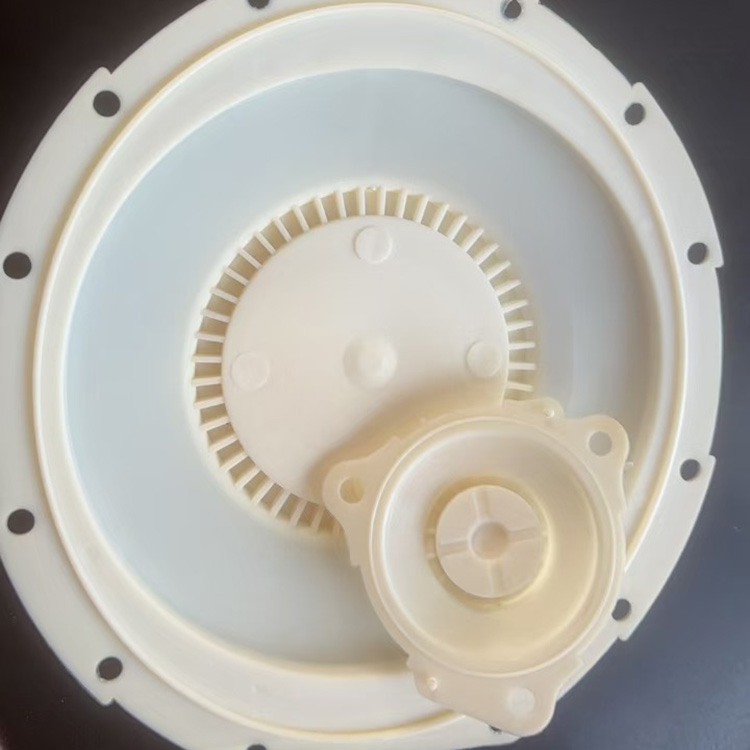
Diaphragms
Diaphragms Diaphragms are flexible membrane components used to isolate, control, transfer, or regulate pressure and fluid movement in industrial equipment. They are widely applied in pumps, valves, pressure regulators, actuators, dosing sys...
Diaphragms
Diaphragms are flexible membrane components used to isolate, control, transfer, or regulate pressure and fluid movement in industrial equipment. They are widely applied in pumps, valves, pressure regulators, actuators, dosing systems, compressors, and chemical processing equipment.
Because a diaphragm can transmit mechanical force while separating different media, it provides an effective solution for applications requiring reliable sealing and contamination prevention.
Basic Structure and Working Principle
A diaphragm is generally manufactured as a flexible membrane with a defined thickness and shape.
During operation, pressure or mechanical force causes the diaphragm to deform. This movement can be used to:
Control fluid flow
Transfer pressure
Operate a valve
Separate different media
Compensate for pressure changes
The controlled flexibility and sealing characteristics of the diaphragm determine the performance and service life of the complete assembly.
Common Diaphragm Materials
Material selection depends on the working environment.
Common materials include:
EPDM
NBR
FKM
PTFE
Silicone
Rubber-reinforced fabrics
PTFE is commonly selected for chemically aggressive environments, while EPDM may be suitable for water and certain chemical applications. NBR is often used where good resistance to oils is required.
The diaphragm material must be compatible with the working medium, pressure, temperature, and mechanical conditions.
Pressure Resistance
Diaphragms are frequently exposed to repeated pressure changes.
Important design factors include:
Operating pressure
Maximum pressure
Pressure differential
Pressure cycling frequency
Diaphragm thickness
A suitable diaphragm should maintain its shape and sealing performance without excessive deformation, cracking, or rupture.
Chemical Compatibility
Industrial fluids may contain chemicals that affect elastomeric materials.
Compatibility evaluation should consider:
Acids
Alkaline solutions
Oils
Solvents
Water
Gas
The chemical compatibility of the diaphragm should be verified using the actual working medium whenever possible.
Fatigue and Service Life
Repeated deformation can cause fatigue over time.
Important factors include:
Number of operating cycles
Deformation amplitude
Operating temperature
Material elasticity
Pressure fluctuations
Proper diaphragm design reduces fatigue stress and helps extend service life.
Temperature Resistance
Temperature can significantly influence diaphragm flexibility and mechanical strength.
High temperatures may cause:
Material aging
Hardening or softening
Loss of elasticity
Low temperatures may cause:
Reduced flexibility
Increased brittleness
Poor sealing performance
The operating temperature range should therefore be considered during material selection.
Sealing Performance
A diaphragm often functions as a dynamic or static sealing component.
Inspection should focus on:
Leakage
Edge sealing
Surface damage
Deformation
Installation accuracy
The reliable sealing performance of a diaphragm helps prevent cross-contamination and protects other equipment components.
Manufacturing and Quality Control
Important inspection items include:
Material verification
Thickness measurement
Dimensional inspection
Surface inspection
Pressure testing
Fatigue testing
Batch consistency
Proper manufacturing control helps reduce defects such as pinholes, uneven thickness, cracks, and surface contamination.
Applications
Diaphragms are widely used in:
Chemical pumps
Dosing pumps
Control valves
Pressure regulators
Pneumatic actuators
Water treatment systems
Gas equipment
Industrial automation systems
Conclusion
Diaphragms are important functional components for pressure control, fluid isolation, and sealing applications.
Through appropriate material selection, precise manufacturing, chemical compatibility testing, pressure resistance evaluation, and fatigue control, manufacturers can achieve reliable diaphragm performance and longer service life.
A professionally designed diaphragm provides stable operation while helping protect equipment, improve process safety, and reduce maintenance requirements.
References
ISO 23936 – Petroleum, Petrochemical and Natural Gas Industries: Non-Metallic Materials
ASTM D2000 – Standard Classification System for Rubber Products in Automotive Applications
ASTM D412 – Standard Test Methods for Vulcanized Rubber and Thermoplastic Elastomers
ASTM D471 – Standard Test Method for Rubber Property: Effect of Liquids
ISO 9001 – Quality Management Systems Requirements
ISO 37 – Rubber, Vulcanized or Thermoplastic: Determination of Tensile Stress-Strain Properties